


Did you know that your air conditioning system accounts for over 50% of your home’s energy consumption during an Arizona summer? As global temperatures continue to fluctuate and desert summers become increasingly demanding, relying on a standard cooling setup is no longer enough. Homeowners across Phoenix, Scottsdale, and the surrounding valleys need proactive, strategic solutions to keep their homes comfortable without watching their utility bills skyrocket.
Optimizing your HVAC system is about more than just surviving the peak summer months. It is about maximizing operational efficiency, protecting your financial investment, and ensuring healthy indoor air quality for your family. This comprehensive guide delivers actionable, expert backed strategies to help you fine tune your cooling system for the ultimate balance of comfort and cost savings this year.
The Core Pillars of Desert HVAC Efficiency
To achieve peak performance from your air conditioner when outdoor temperatures exceed 110°F, you must address both the mechanical health of the system and the structural environment of your home.
Prioritize Regular Professional Maintenance
The single most effective way to prevent mid summer breakdowns is to schedule professional HVAC maintenance before the extreme heat settles in. A comprehensive system tune up addresses the hidden vulnerabilities that lead to catastrophic failures during peak usage.
- Electrical Inspection: Technicians test capacitors, tighten electrical connections, and measure voltage to prevent sudden system shut offs.
- Refrigerant Level Verification: Operating with incorrect refrigerant levels strains the compressor and severely diminishes cooling capacity.
- Coil Cleaning: Outdoor condenser coils caked in desert dust and debris cannot reject heat efficiently, forcing the system to run longer cycles.
Transition to Smart Thermostat Technology
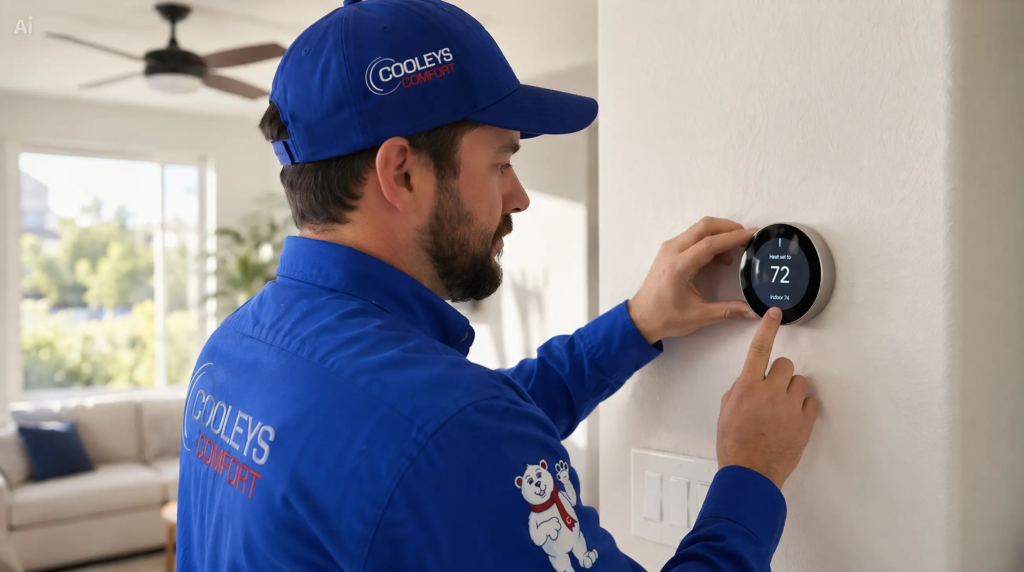
Manually adjusting your thermostat throughout the day is an inefficient way to manage climate control. Modern smart thermostats eliminate guesswork by adapting to your lifestyle and the external weather conditions automatically.
By establishing targeted temperature zones and cooling schedules, you can save up to 10% annually on heating and cooling costs. Program your system to allow the indoor temperature to rise slightly when the house is empty, ensuring the AC actively cools the home right before you arrive.
Expert Insight: Avoid dropping your thermostat to an ultra low temperature when you arrive home. It will not cool your house any faster; it simply forces the system to run at maximum capacity for a longer period, increasing wear and tear.
Combating the Hidden Energy Drains in Your Home
Even a brand new, high efficiency HVAC unit will struggle if your home allows treated air to escape while letting outdoor heat infiltrate your living space.
Seal and Insulate Your Air Ducts
Leaky ductwork is one of the most significant silent drivers of high energy bills. On average, homes lose roughly 20% to 30% of the air moving through the ventilation system due to leaks, holes, and poor connections. In Arizona, where ductwork often runs through scorching attic spaces, leaking ducts pull superheated attic air directly into your living spaces. Professional duct sealing ensures that every cubic foot of chilled air makes it to its intended destination.
Enhance Home Insulation and Shielding
Your home’s envelope acts as the barrier between your managed indoor climate and the harsh desert sun. Ensuring your attic has adequate insulation stops heat from radiating downward through your ceilings. Additionally, treating west and south facing windows with solar screens or heavy drapes dramatically reduces solar heat gain, taking a massive physical load off your air conditioning unit.
Signs It Is Time for an HVAC Upgrade in 2026
No mechanical system lasts forever, especially under the grueling operating conditions of the Southwest. Recognizing when to transition from repairing an old unit to investing in a replacement can save you thousands of dollars in emergency breakdown costs.
Frequent Repairs and R 22 Refrigerant Dependencies
If you find yourself calling for emergency AC repair multiple times a summer, you are likely pouring money into a failing asset. Furthermore, if your older system still relies on R 22 Freon, sourcing this phased out chemical is becoming prohibitively expensive. Upgrading to a modern, eco friendly system eliminates these compounding financial burdens.
Rising Energy Bills Despite Consistent Usage
Compare your current monthly energy statements with your statements from previous years. If you notice a steady, unexplained upward trend in kilowatt hour consumption during identical weather periods, your HVAC system is losing its operational efficiency. Modern variable speed systems offer unparalleled efficiency by adjusting their output to match precise cooling needs, rather than running at full blast 100% of the time.
Maintaining Healthy Indoor Air Quality
When summer heat forces us to spend 90% of our time indoors, the quality of the air we breathe becomes paramount. High temperatures and sealed homes can trap airborne allergens, dust, and VOCs inside.
Upgrade Your Air Filters Regularly
In the dusty desert environment, standard fiberglass filters should be replaced every 30 days during high use seasons. Consider upgrading to a pleated filter with a MERV rating between 8 and 11. These filters capture significantly more microscopic particles without restricting the vital airflow your system needs to function safely.
Consider Whole Home Air Purification
For families dealing with respiratory issues or asthma, integrating a dedicated air purifier or UV germicidal light system directly into your HVAC ductwork offers a premium defense. These systems continuously neutralize airborne bacteria, mold spores, and fine dust particles before they can circulate through your rooms.
Conclusion: Take Control of Your Home Comfort
Navigating an Arizona summer requires preparation, strategy, and a proactive mindset. By scheduling professional preventative maintenance, sealing structural energy leaks, upgrading to smart controls, and monitoring indoor air quality, you protect your wallet while ensuring a reliable oasis for your family. Do not wait for the next record breaking heat wave to find out if your cooling system is up to the challenge. Partner with licensed local professionals today to secure complete peace of mind all summer long.
Frequently Asked Questions
What is the ideal thermostat setting for an Arizona summer?
The U.S. Department of Energy recommends setting your thermostat to 78°F when you are at home and active. If this feels too warm initially, lower it gradually or utilize ceiling fans to create a cooling wind chill effect across your skin.
How often should I change my AC filter during the hot months?
During the peak summer season, you should check your air filter every month. If you have pets, respiratory sensitivities, or live in an area prone to blowing dust, expect to replace it every 30 to 45 days.
Why is my air conditioner freezing up when it is hot outside?
An AC unit freeze-up is typically caused by two issues: restricted airflow or a refrigerant leak. A dirty air filter or blocked return vents prevent warm air from blowing over the evaporator coil, causing the temperature to drop below freezing and turn moisture into ice.
How long does a typical HVAC system last in Arizona?
Due to the extreme operational demands of the desert, the average lifespan of an HVAC unit in Arizona is roughly 10 to 14 years. Regular professional maintenance can extend this lifespan toward the upper limit.
Is it worth upgrading to a variable speed AC system?
Yes. Unlike traditional single stage units that turn completely on or off, variable speed systems run continuously at lower, highly efficient speeds. This provides superior humidity control, quieter operation, and significantly lower energy bills.